 Ru
Ru Uz
UzSogdian inscriptions from the collection of the Samarkand State Museum Reserve. Inventory No. KP- 6251 /3
Sogdian inscriptions from the collection of the Samarkand State Museum Reserve. Inventory No. KP- 6251 /3
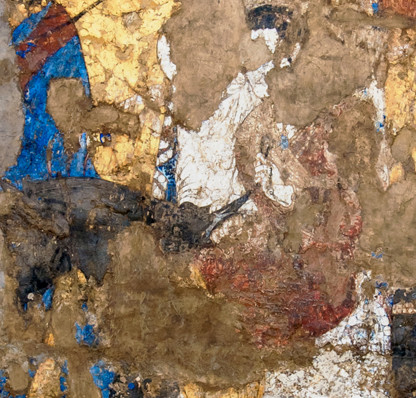
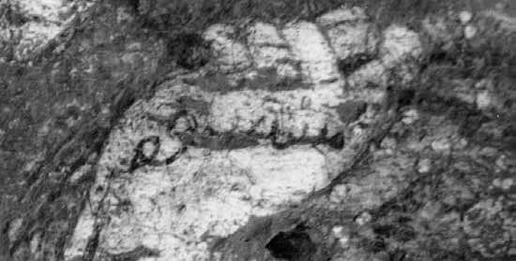
Southern wall of Afrasiab. Figure 6. The first lady is sitting on slender black and gray horse with short trimmed mane and with a high raised small muzzle, with blue eyes. The woman sits in the saddle with her legs dangling to one side. With her left foot in a black boot, she leans on a stirrup hanging on a blue stirrup belt, right leg tucked under left. The rider’s face is poorly preserved. She is dressed in a long yellow silk dress, the numerous light folds of which lie on foot. Beads descend on the chest and torc with a large blue stone. She holds the reins in her left hand, on the outer side of which there is a Sogdian inscription.
Transliteration
/1/ ʼʼztch pw(n)h
Translation
/1/ noble lady
Notes
The Sogdian inscription on the hand of a richly dressed woman on horseback is a sign of her belonging to a noble family. The word ’’z’tch is feminine from ’’z’t(’k) “free, noble, azat”, it is well attested in Sogdian, pwnh – hapax, V. A. Livshits considers it possible to build it to the ancient Iranian paθnī -, feminine from *pati-.
Bibliography
Альбаум Л. И. Живопись Афрасиаба. Ташкент: Фан, 1975. С. 43, таблица XXII.
Лившиц В. А. Согдийская эпиграфика Средней Азии и Семиречья. Санкт-Петербург: Филологический факультет Санкт-Петербургского университета, 2008. С. 319.
Grenet F. Afrasiab: Ancient Samarkand // The Silk Road. Trade, Travel, War and Faith (ed. S. Whiffield, N. Sims-Williams), London, 2004. P. 110-111.
Livshits V. A. Sogdian epigraphy of Central Asia and Semirech’e / tr. from the Russian by T. Stableford.
Ed. by N. Sims-Williams. London: School of oriental and African studies, 2015. (Corpus inscriptionum iranicarum. Part II: Inscriptions of the Seleucid and Parthian period and of Eastern Iran and Central Asia. Vol. III: Sogdian). P. 242.
Каталог памятников согдийской письменности в Центральной Азии, Самарканд, МИЦАИ, 2022,С. 223-224